Brooklyn Letters IconBrooklyn Letters

1139 Prospect Avenue, Brooklyn

4.9 56 reviews

  • Avatar Emily Matles ★★★★★ a week ago
    We would highly recommend Ally! Our son always asks about her, so very thankful to Brooklyn Letters for introducing us.
    ~ Emily, mom of Brooklyn 2 year old
  • Avatar T Ainsley ★★★★★ 5 months ago
    I cannot express how grateful and rewarding my experience with Brooklyn Letters has been. Her tutor Ms. Daria is so knowledgeable, amazing, kind and awesome. My daughter has made so much progress in Literacy and Math and it's all … More thanks to Ms. Daria. I know my daughter is sad that she can no longer work with Ms. Daria, as she looked forward to their sessions every week. Thank you again!
  • Avatar Natalie Levon ★★★★★ 4 months ago
    Nicole has been an amazing therapist!! She played a tremendous role in our daughter’s speech progress and overall development. She has come such a long way and we are so happy with the therapy she received!
  • Avatar Colin Peters ★★★★★ 6 months ago
    We could not be happier with the services Valerie provided! She is very thoughtful and knowledgeable and provided significant guidance to support our daughter's speech development outside of our scheduled sessions. She established … More a great working relationship with her, and she will definitely be missed! Your business model is amazing and it was an absolute pleasure working with Valerie. I've referred your organization and Valerie to the Executive Director of our daughter's school and friends/colleagues who are in need of speech therapy services.
  • Avatar Lil Amatore ★★★★★ 7 months ago
    Christina was absolutely wonderful. She went out of her way to win my son over and it worked. He looked forward to her visits and his speech improved so much under her care. She was super flexible and it’s clear she truly cares. We adore … More Christina and we’re going to miss her. Almost sad he improved so much! She’s simply amazing and we can’t say enough how great she is. I would recommend her services to anyone and everyone, without hesitation. Thank you so much for connecting us with her!
  • Avatar Heather Liljengren ★★★★★ a year ago
    We cannot say enough good things about Effie, the ASL teacher, who was so engaged and effective with our 2 year old daughter from the very first session! Effie gladly included our whole family in the sessions! Her expertise and fantastic … More personality gave our daughter a way to communicate that she was so desperately seeking. The coordinators at Brooklyn Letters were so helpful and communicative…I would highly recommend their services!
  • Avatar Brigid Bower ★★★★★ 11 months ago
    Samantha Dalmas was fantastic! We saw her for a feeding therapy evaluation and while she doesn’t think my daughter needs more feeding therapy sessions at this time, but she gave me lots of tips to try. If my daughter's doctors want … More to see more progress at her next appointment, I wouldn’t hesitate to reach out to Samantha again.
  • Avatar Duygu Başaran ★★★★★ 11 months ago
    Brooklyn Letters was recommended to me through a friend's speech therapist friend in NJ. The articulation evaluation for my daughter went well. We were pleased with Kristin's services.
  • Avatar Kelley Peters-Patel ★★★★★ a year ago
    Melissa was wonderful. Our daughter warmed to her immediately and by the time she left, had already started "practicing" some of the techniques Melissa had shown her. I will not hesitate at all to reach out to Melissa again, should … More the need arise.
  • Avatar R Elmore ★★★★★ a year ago
    Aileen was INCREDIBLY helpful to us, both in assessing possible origins of my grandson's food aversions, as well as informing us of various available interventions to consider.
    I can’t thank you and Brooklyn Letters enough for connecting
    … More us with Aileen. In all our feeding therapy journey we have not gotten anything near the kind of benefit that we did from her. Her knowledge, professionalism, and responsiveness have put us on the path of progress with my grandson and has also made us feel genuinely well cared for.
  • Avatar Christine Weiher ★★★★★ 2 years ago
    We were amazed with Allison! She met my son at 2 1/2 years old, not speaking much at all, and over a computer, and she was able to develop a bond and friendship, so much so that he would look forward to his weekly computer time with Allison. … More I was not sure how the speech therapy would go- but we are so happy that we tried it out and continued. It allowed my son to gain confidence in his speech, make a new friend :), and also give him the skills and a bit of understanding of how to shape his mouth or where to place his tongue to make the proper sounds. We were extremely happy with Allison- she was fantastic to work with.
  • Avatar Andrea Saffady ★★★★★ 2 years ago
    My sessions with Karen have been extremely helpful. My speech has improved tremendously. In fact, I just finished 2 hours of conducting interviews with a consulting client via MS Teams and I have an upcoming conference call. Both my … More neurologist and neurosurgeon remarked about how good my speech is. Much of the day it is perfect, although I still have some rough spots when I get tired or speak too quickly. One of my granddaughters is a speech pathology student at Ithaca College. She sat in on 2 sessions while she was home for winter break, and she was very impressed with Karen.
  • Avatar Jacob B ★★★★★ 4 years ago
    We were delighted with Christie. First, and most importantly, our son made great strides under her guidance. So great, that we felt he no longer needed help! She was incredibly patient and kind with him and our son really responded to … More her. Christie was also great with me and my wife. She provided thorough and informative updates on our son's progress and which exercises she was using with him, so we could reinforce what she was teaching him. All in all, we had a fabulous experience with Christie and would highly recommend her.
  • Avatar Jessica C ★★★★★ a year ago
    Theo was wonderful and his work with my son has produced some progress. I am grateful for the services Theo provided.
  • Avatar Melissa Stevens ★★★★★ 2 years ago
    Highly recommend Jill. She is a total pleasure to work with. After a few months working with Jill, my son is reading above grade level and LOVES to read. Mission accomplished!
  • Avatar Demet Evren ★★★★★ 2 years ago
    Paige was great and we had been really happy with her. I would highly recommend her! I recommend Brooklyn Letters to whomever asks for a speech therapist.
  • Avatar Jeizel Rosenthal ★★★★★ 2 years ago
    Isabel was WONDERFUL and our son absolutely adored her, and he is making great progress with his reading and writing.
  • Avatar Lesley Duval ★★★★★ 3 years ago
    Theo was fantastic with our 4yo son. We were very worried that his progress would fall off when we had to switch to remote sessions, but Theo kept our son happy and engaged through the screen. Highly highly recommend!
  • Avatar Samantha Packard ★★★★★ 3 years ago
    We've been working with Theo from Brooklyn Letters for close to 4 months now and the results are apparent; our daughter has vastly improved her speech in a relatively short amount of time. We make "Theo Day" a celebration … More in our house with pancakes for breakfast, and the enthusiasm is matched in the sessions. Theo is fun, patient, professional, and caring, and he gives us the tools to take the lessons beyond the session. Thank you Theo, and Brooklyn Letters, for helping our daughter express herself.
  • Avatar Travis Ricca ★★★★★ 3 years ago
    I worked with Alina to enhance my pronunciation, tone, and pacing while communicating socially and in a work environment. She was great to work with and clear about goals and learning objectives. The improvement from day 1 has been tremendous! … More
  • Avatar Enrico Bermudez ★★★★★ 3 years ago
    Cathy has been excellent with us and our son. We will sorely miss her. He has improved significantly with Cathy’s help. Cathy was a true partner with us, especially as we pursued additional help through our son’s school system.
  • Avatar Kayne Elisabeth Wilk ★★★★★ 4 years ago
    We really loved working with Alina, she is so fantastic. Patient yet firm, and determined the best course of action very clearly and succintly for us. And it all transitioned so well to Zoom as well. I will definitely be back in touch for … More services for our other child after summer break!
  • Avatar Jen S ★★★★★ 4 years ago
    Vera was amazing! My 11 yo daughter made progress so quickly and really looked forward to her sessions. She was kept motivated and engaged.
  • Avatar susie tofte ★★★★★ 3 years ago
    The work that Allison P. did with our daughter over the years has been invaluable to us. Our daughter had such a good relationship with Allison, and it allowed them to work really well together - even remotely these past 6 months. This … More year, Allison went above and beyond by helping us throughout the neuropsych eval we did, trying to re-open our daughter's IEP at her school, and eventually landing her at our chosen school. She was in contact with our daughter's teachers, with the neuropsychologist, and made herself available as a reference to speak on behalf of our daughter's learning differences.
    Allison stopped by our house last week to give our daughter cupcakes and say goodbye, and I literally cried with appreciation for what an amazing speech therapist she has been. She has been our daughter's biggest champion. The new families that she will work with this year are lucky to have her.
  • Avatar Alicia Perez-Katz ★★★★★ 4 years ago
    Sydney was great! Our son was sad to end his sessions with her, which says a lot. We appreciated her honest assessment of his skill level, and he now has materials to self monitor and practice. Thank you!
  • Avatar Kristin Ames ★★★★★ 4 years ago
    Our experience with Theo was terrific. Theo was great with my son. He developed a positive relationship with him based on sincerity, respect, trust and a deep personal connection. In their lessons, Theo was encouraging, creative and kind. … More He helped our son understand how to differentiate the sounds he made when he spoke, and gave him great exercises to practice every week between lessons. Our son was sorry to have the lessons come to an end, but recognized that Theo had helped him as much as possible and it was time for him to stop. Theo explained to him (and us) how to keep working to get the last 5%, and encouraged him to keep working on the exercises on his own. I have recommended Theo to another parent who noticed my son's improvement and inquired for her own son.
    We are all grateful to have gotten to know Theo, and we greatly appreciate all the work he did to help our son.
  • Avatar Aisha Holder ★★★★★ 4 years ago
    "I have nothing but wonderful things to say about Michelle Macroy-Higgins. We are extremely pleased with her work with our daughter. I was so grateful for my daughter to have a speech therapist who is a researcher (specialty in late … More talkers), graduate professor and practitioner. Her expertise was clearly evident in our conversations and work with our daughter. She was very responsive to my questions and often sent articles and other materials about language development that I found helpful. Thankfully, my daughter's speech improved tremendously. Michelle developed such a warm relationship with my daughter. My daughter was always excited to see Michelle and would greet her at the door with a big hug. Lastly, I would add that Michelle always demonstrated empathy with me as a mother who was initially worried about her daughter's language development. I could go on and on about how pleased we were with Michelle's work."
  • Avatar Andrea Peartree ★★★★★ 4 years ago
    Theo is a wonderful Clinton Hill speech therapist. We were really pleased with him. Our son showed drastic improvement, not only in his speech but in his confidence.
  • Avatar mario costa ★★★★★ 4 years ago
    Alexa has been an enthusiastic, reliable, well prepared and caring teacher for our 6 year old daughter. She has been able to improve and increase our daughter's confidence lesson by lesson with patience and competence; through varied … More and productive didactic practice. Alexa has engaged our daughter in several activities that always kept her motivated and eager to learn literacy. My wife and I, both of us are educators, feel so fortunate to have had the opportunity to observe Alexa's pedagogical skills. Alexa has had a big impact on our daughter literacy growth. Thank you Brooklyn Letters!
  • Avatar Lily Alt ★★★★★ 4 years ago
    We were absolutely DELIGHTED with Marsha's services. She was wonderful. We found her to be kind, fun, engaging, very knowledgeable. She provided us with clear instructions and additional written handouts each week. She engaged our … More son with different techniques and toys, and showed us how to use her techniques when we were interacting with him. I actually just texted her on Saturday - Our son finally said "more" - one of the target words we had been working on with her. It was a total joy to hear, and I had to share it with her - she wrote back immediately to congratulate us. I am so appreciative of her expertise, and wish we could have seen her for longer. I recommended her to another family in our neighborhood who is looking for a speech therapist.

Yelp (also view our 35+ filtered reviews)

QUEENS, NYC BABY TODDLER PRESCHOOLER SPEECH-LANGUAGE DELAY

EARLY STAGES OF COMMUNICATION

QUEENS, NYC BABY TODDLER PRESCHOOLER SPEECH-LANGUAGE DELAY

EARLY STAGES OF COMMUNICATION
As Featured In:

Speech Pathologists Come to Your Queens, NYC Home! | Best In-Person Private Pay Baby Toddler Preschooler Speech-Language Delay Therapy | Free Consultation and Meet & Greets With Our Specialists

WE TRAVEL TO YOU THROUGHOUT QUEENS:
Astoria, Auburndale, Bayside, Bayswater, Beechhurst, Belle Harbor, Bellerose, Breezy Point, Briarwood, Cambria Heights, College Point, Corona, Douglaston, East Elmhurst, Edgemere, Elmhurst, Far Rockaway, Floral Park, Flushing, Forest Hills, Forest Park, Fresh Meadows, Glendale, Hamilton Beach, Hillcrest, Hollis, Hollis Hills, Holliswood, Howard Beach, Hunters Point, Jackson Heights, Jamaica, Jamaica Estates, Jamaica Hills, Kew Gardens, Kew Gardens Hills, Laurelton, Lefrak City, Lindenwood, Little Neck, Long Island City, Malba, Maspeth, Meadowmere, Middle Village, Neponsit, North Corona, Oakland Gardens, Ozone Park, Pomonok, Queens Village, Rego Park, Richmond Hill, Ridgewood, Rockaway Park, Rosedale, Roxbury, South Jamaica, South Ozone Park, Springfield Gardens, Steinway, Sunnyside, Utopia, Whitestone, Willets Point, Woodhaven, Woodside.
Speech-Language Pathologists and Therapists We Work With

We travel to you and we also offer remote services. Some of the speech-language pathologists we work with are trained in the Orton Gillingham approach. Many of the speech-language pathologists we collaborate with are trained in literacy and offer support with decodingspelling and reading fluency services. Our skilled speech-language pathologists and therapists work with babies, toddlers, school-age students, and adults with expertise in:

We also support families pursuing homeschooling for K–5 students, offering personalized in-home or remote instruction tailored to each child’s learning style and needs.

Speech-Language Pathologists and Therapists We Work With

We travel to you and we also offer remote services. Some of the speech-language pathologists we work with are trained in the Orton Gillingham approach. Many of the speech-language pathologists we collaborate with are trained in literacy and offer support with decodingspelling and reading fluency services. Our skilled speech-language pathologists and therapists work with babies, toddlers, school-age students, and adults with expertise in:

We also support families pursuing homeschooling for K–5 students, offering personalized in-home or remote instruction tailored to each child’s learning style and needs.

Training/Certifications
TESTIMONIALS

My then 2 year old son used to be very shy and scared of being alone with somebody that he didn’t know, and so we have decided to get someone that could help him with his speech delay and do the therapy sessions in the place where he would feel secure and comfortable – our home. I have reached out to Craig, and he’s been very helpful and kind to answer all our questions and requests. Through Brooklyn Letters, we have been referred to Penny, which I believe is the best fit speech therapist for my son. She’s been very patient with him from day 1. She’s cheerful and lively, and she surely knows how to interact and get the attention of a toddler. She’s also thoughtful and treats my son like a family. My son is just so comfortable being around her.
We have been with Penny for 1.5years now and my son’s speech has developed from zero to now being able to say three to four word sentences. We are very happy and satisfied and would continue do sessions with her until my son is ready.

-Gel Molino

We were extremely happy with Kristen and all she has done for our son.
My baby went from speaking 30 words 9 months ago to yapping away and having vigorous conversations. We will be forever grateful for Kristen and all she has done for our son and our family!!

- Ella B.

Soooo Happy We Found You!
After two awkward sessions with different speech therapists, who favored two different approaches, a quick search online led me to Brooklyn Letters and Craig, who promptly remedied my confusion about how to best treat my son's speech delay. On Craig’s recommendation, he's been seeing Lisa, Brooklyn Letters speech therapist, for two months now, and I wanted to share how we are dazzled by his progress. Lisa is so wonderful. At every session (in our home) I'm impressed by her patience, thoughtfulness, preparedness, and creativity. In fact, I often find myself drawn to the rug where she works with my son, so I can learn to better model phrases for him when Lisa's not around, not to mention her stellar assortment of toys and books: every session has its own unique theme. So, thanks Craig for sending her our way!

- Tanya (mom of JF, 2)

We were absolutely DELIGHTED with Marsha's services. She was wonderful.
We found her to be kind, fun, engaging, and very knowledgeable.
She provided us with clear instructions and additional written handouts each week.
She engaged our son with different techniques and toys, and showed us how to use
her techniques when we were interacting with him. I actually just texted her on Saturday -
Our son finally said "more" - one of the target words we had been working on with her.
It was a total joy to hear, and I had to share it with her - she wrote back immediately to congratulate us.
I am so appreciative of her expertise, and wish we could have seen her for longer.
I recommended her to another family in our neighborhood who is looking for a speech therapist.

-Lily Alt

Two Thumbs Up!
We are so grateful to Craig. He has worked with our son, Max, for over a year with his speech delay. Max’s progress with Craig has been phenomenal to the point where, going into kindergarten in September, Max will no longer be needing speech services! Craig has been very thoughtful in tailoring the program to meet Max’s needs and finding ways to inspire him. We’re so grateful we found him.

- Irene and Julie, mothers of Max
Check Out Other Testimonials!
Meet the CEO
Presented at:

Queens Letters is owned and operated by Brooklyn Letters.

BABIES, TODDLERS, PRESCHOOLERS

During an initial consultation or evaluation, your child’s speech and language skills will be assessed to determine if there are any speech or language delays. Analysis will pinpoint where your child is having difficulty with their speech and language development. Pinpointing the underlying difficulties is critical for effective treatment. In addition to language therapy, we provide speech therapy for all ages.


For this reason, we’ve developed a parent’s guide into what an early language assessment is, how a speech pathologist evaluates children, the role of play in understanding communication, and when you should consider professional early intervention.

EARLY STAGES OF COMMUNICATION

Before a child speaks, he/she child relies on non-verbal communication, e.g. pointing, reaching, and handing an object to a parent. Babies and toddlers with communication delays- who are not ready to speak- first need help learning how to communicate non-verbally and some babies and toddlers need help with their social focus, called joint attention. Therapy focuses on increasing the frequency and improving the quality of the child’s communicative gestures and improving their focus during social games/activities.

EARLY EXPRESSIVE LANGUAGE DEVELOPMENT

Early expressive language development is characterized by the quantity and quality of the child’s vocabulary, and the manner in which a child combines words before speaking full sentences. Once the child is speaking in full sentences, his or her development is characterized in terms of how well the words are used to convey more complex ideas or thoughts.

Delays in early language development involve slower acquisition of sounds, words, combining words, less frequent social communicative attempts, and difficulty understanding cognitive or linguistic concepts (such as big vs. small, under vs next to, some vs all, or first vs. last). If a child is having significant expressive language issues compared to peers, he or she may have an expressive language disorder (also known as spoken language disorder) or an expressive language delay (for children 4 years and younger).

LATE TALKERS

While communication delays in some children may not point to an expressive language disorder, some toddlers with a limited vocabulary for their age and exhibit other symptoms may be at risk. In particular, studies suggest that mild comprehension for their age, a family history of language and learning issues, and using few gestures when communicating are indicators that a child could have continuing language delay. This may mean that a child is showing signs of a language disorder (expressive or expressive/receptive language) also known as a Developmental Language Disorder (DLD), or language impairment as research calls it.

Stages of babbling:

  • 0-2 Months: Crying and cooing
  • 3-4 Months: Simple speech sounds (goo).
  • 5 Months: Single-syllable speech sounds (ba, da, ma).
  • 6-7 Months : Reduplicated babbling – repeating the same syllable (ba-ba, na-na).
  • 8-9 Months: Variegated babbling – mixing different sounds (ba de da).
  • 10-11 Months: Jargon – complex babbling with simple words (baba da ma ball da).
  • 12 Months: Real words gradually take over.

By 1 year of age, most babies will:

  • Look for and be able to locate the source of a sound.
  • When you call their name, they usually respond.
  • Wave goodbye.
  • Look where you point when you say, 
  • Babble with intonation (voice rises and falls as if they speak).
  • Take turns “talking” to you, paying attention and listening when you speak, and then babbling when you stop. Say “da-da” to their father and “ma-ma” to their mother.
  • Say at least 1 word.
  • Make sounds while pointing to items they want that are out of reach.

By the age of two, most toddlers will:

  • Point to various body parts and common objects.
  • Point to common images in books.
  • Follow 1-step commands without a gesture, such as, “Put your cup on the table.”
  • Be able to say about 250 but cut off is 50 spontaneous words, and they are combing words Dadda Up
  • Say a few two-word phrases, such as “Daddy go,” “Doll mine,” and “All gone.”
  • Perhaps say 3-word sentences like “I want juice” or “You go bye-bye.”
A Time to Talk

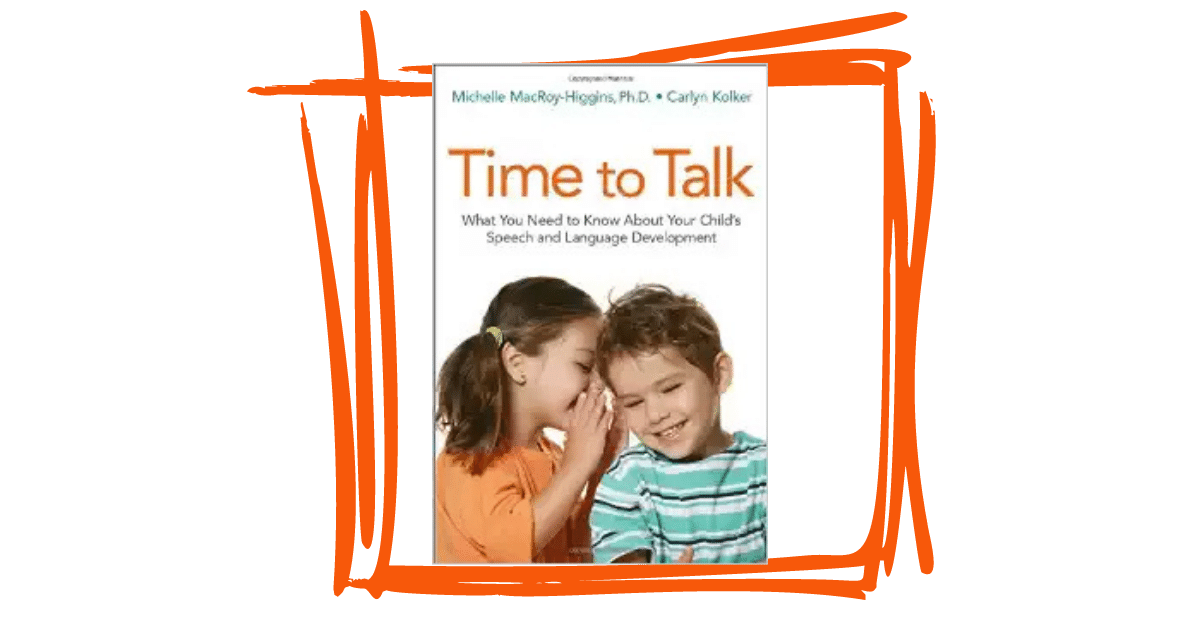
Know more about late-talking in this interview with Dr. Michelle Macroy-Higgins, Ph.D., CCC-SLP, speech-language pathologist, associate professor in the Speech-Language Pathology and Audiology Program at Hunter College, New York, and author of Time to Talk: What You Need to Know About Your Child’s Speech and Language Development. She speaks with speech-language pathologist, learning specialist, and Brooklyn Letters CEO Craig Selinger about the signs and symptoms of late-talking and how to diagnose it in young children.

Everything You Need to Know If You Have a Toddler Who Is a Late Talker and FREE pamphlet on Late Talking!

During this early stage of expressive language, toddlers also begin to acquire and develop their narrative skills. This is crucial as young children expand their use of language and communication by retelling or describing stories, experiences, or past events. Narrative development is directly correlated with a child’s success in school and academic achievement.

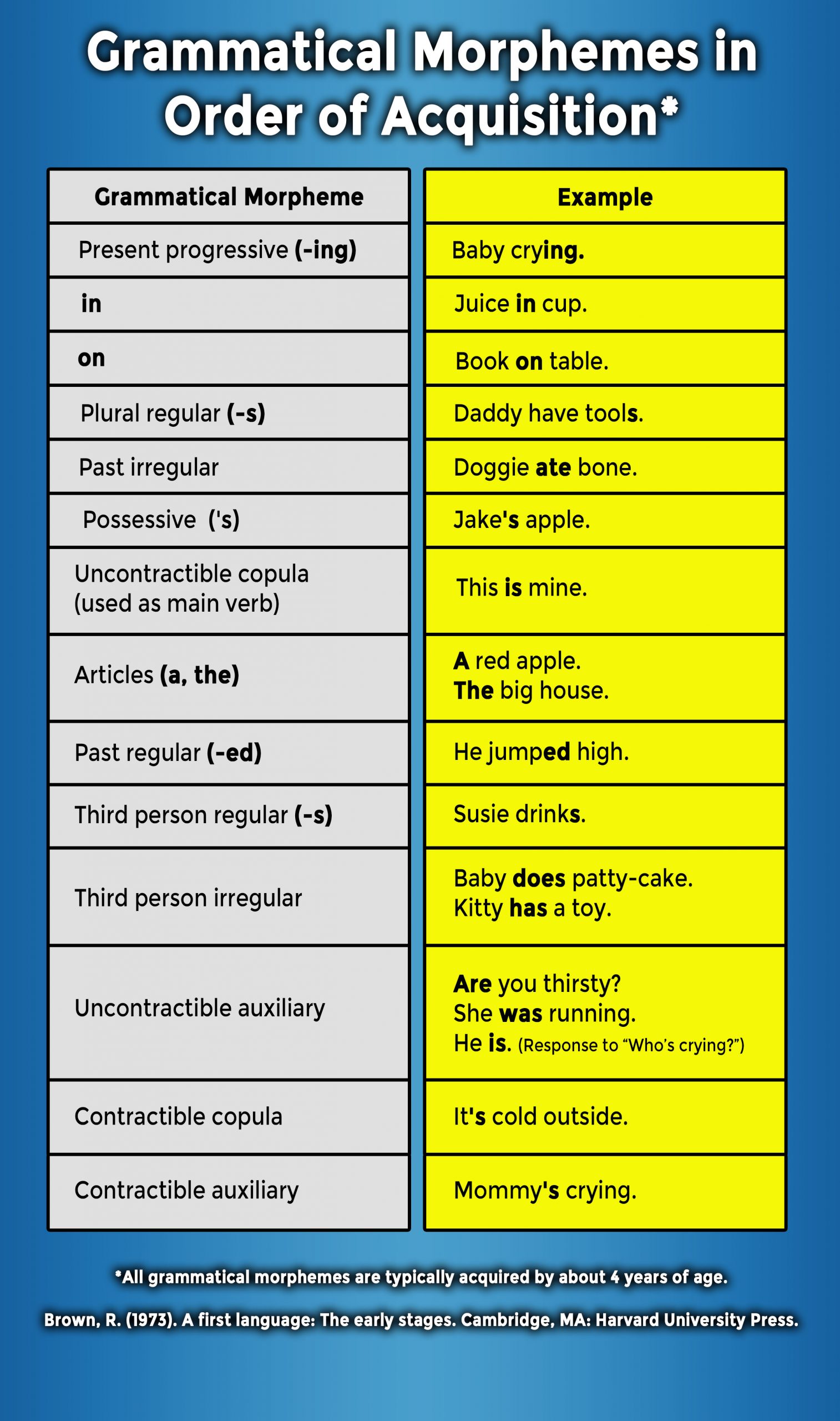
Typically developing children commonly acquire all grammatical morphemes by age four (see chart below). But for children struggling with narrative language, parents may notice some delays or missing aspects in their child’s language skills. At Brooklyn Letters, support is provided for students who struggle with narrative development.

Another condition is Social Communication Pragmatic Disorder (SCPD). Learn more about social communication pragmatic disorder, its symptoms, causes, and strategies parents can employ to support their child with this disorder.

Read about Early Childhood Developmental Milestones.

Grammatical Morphemes in Order of Acquisition scaled 1

Narrative Development in Children

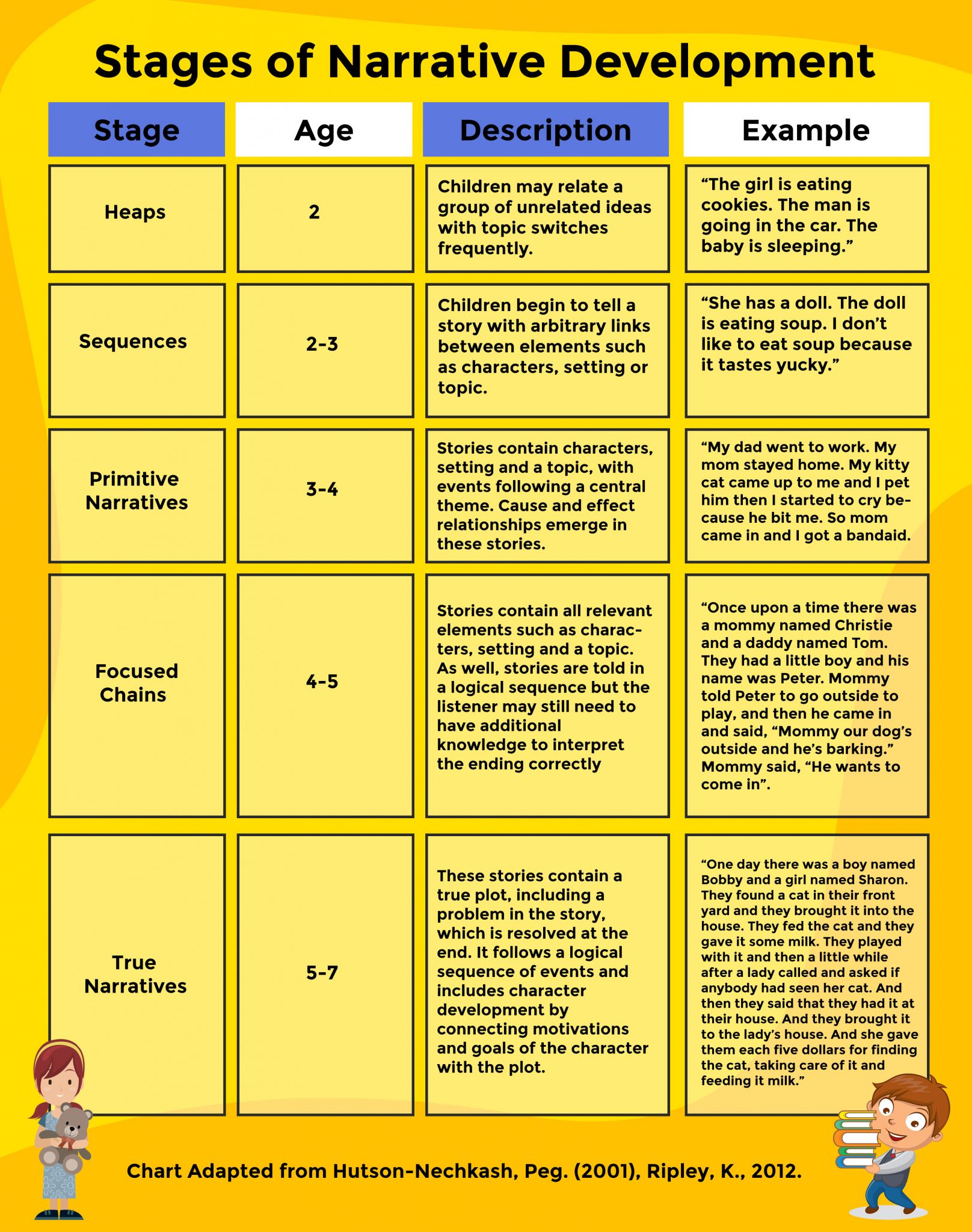
According to research, narrative development can play a significant role in determining a child’s later success in school and literacy. This is because the narration and relaying of a previous experience allows the child to communicate and use language that is beyond the present context or the “here and now.” This determines the child’s grasp of linguistic structure and the words chosen. But what exactly is narrative development? And how do you know your child’s progress is appropriate for his or her age?

A child’s narrative skills refer to his or her ability to use language in telling or communicating a story. As children develop their narrative skills, they learn to follow the rules of story-telling. This involves sequencing of events, organization, introducing characters, establishing the plot or main idea, and taking perspectives.

Narrative skills are first developed and introduced in very young children through storytelling or bedtime story sessions with their parents.

By listening to stories and being exposed to story-telling, children begin to understand and develop narrative structure. In most cases, children with speech and language problems or conditions struggle with comprehending and executing narratives. At Queens Letters, we support children with narrative language difficulties and speech and language delays.

Stages of Narrative Development 1616x2048 1

What is an Expressive Language Disorder?

Unlike speech sound disorders, which involve difficulties in producing spoken sounds, language disorders refer to problems using spoken language compared to peers. These expressive problems manifest in at least one of these areas: spoken vocabulary, complexity of what the child is saying (grammar), and social use of words (pragmatics). These issues become more apparent when children, older than 4 years of age, have difficulties telling stories and making friends.

Language Disorders are classified as two types:

Mixed Receptive-Expressive Language Disorder – Difficulty with comprehension or understanding the words or complexity of what the individual understands compared to peers and has an expressive language disorder.

Expressive Language Disorder – Receptively, the individual is age-appropriate but there are significant issues expressing oneself compared to peers.

There is no such thing as just a receptive language disorder. If a child is misdiagnosed with this label, either the child has significant attentional difficulties, or the child’s expressive language skills were not thoroughly assessed. Licensed speech-language pathologists are the best professionals to thoroughly assess expressive language skills.

Spoken or expressive language disorder is a lifelong condition and appears in early childhood. It is often developmental in nature but may also be caused by traumatic brain injury. An individual with expressive language disorder exhibits normal comprehension skills but has difficulty with written and/or verbal expression. This can impair academic achievement and make it more difficult to socialize in groups with peers.

What Are the Signs of an Expressive Language Disorder?

In many cases, signs of an expressive language disorder may be invisible to parents and teachers. Some signs and behaviors may not directly imply a language problem. According to research, one of the early signs of a language disorder in children is late talking. The Hanen Centre defines a late talker as a child between 18 and 30 months with a good understanding of language and typical development in other areas (hearing, vision, motor, and cognitive skills) but has a limited spoken vocabulary compared to peers for their age. However, late talking becomes a more serious concern for children who also exhibit other risk factors, such as:

  • Quiet or little babbling as an infant
  • Has a history of ear infections
  • Limited consonant sounds
  • Does not link pretend ideas and actions together during play
  • Does not imitate words or sounds
  • Uses mostly nouns and few verbs
  • Difficulty interacting or playing with peers
  • A family history of communication, learning, and academic difficulties
  • Mild comprehension delay for their age
  • Uses few gestures to communicate

Other signs of Expressive Language Disorder also include:

  • less developed vocabulary than their peers
  • often uses fillers like “um,” “uh,” and “huh”
  • having no problems with understanding, but struggle with speaking, asking questions, or answering
  • using short phrases or sentences or say the same words or phrases over and over;
  • struggling with telling stories
  • for toddlers, relying on using gestures
  • lacking intonation and modulation when talking
  • shying away from the conversation and avoid social situations or group interactions
  • may say a lot but not make much sense

Signs of a child who needs expressive language therapy:

  • Difficulty naming items and objects.
  • Does not link words together or may use sentences that are shorter than those used by children of the same age.
  • Uses sentences that are not grammatically correct and, therefore, can sound immature.
  • May use jargon (made-up words) when talking.
  • Speaks in sentences that are ‘jumbled’ (i.e., words are in the wrong order, lots of stopping and starting, creating a lack of flow).
  • Can be misunderstood by unfamiliar people.
  • May have difficulty finding the correct words to use when describing something or having a conversation. The child may use techniques such as ‘circumlocution’ (talking around the word) or a word with a similar meaning to help them express themselves.

PBS.ORG, Average Number of Words Produced
  • At 15 months= 14 words
  • 18 months= 68 words
  • 23 months= 200 words
  • 24 months- 200 to 300 words                  Dr. Rhea Paul, Ph. D.
  • 30 months= 570 words

Diagnosing Expressive Language Disorder

As with all speech or language disorders, it is always important to first ensure that there are no hearing issues affecting language development. A hearing assessment by an audiologist is necessary to rule out any issues with hearing (ears). Even undetected ear infections can interfere with acquiring language in younger children.

To get your child diagnosed with an expressive language disorder, a speech-language pathologist (SLP) must do a thorough evaluation. A comprehensive assessment must be conducted with the help of the child’s family and teachers. This evaluation process includes both informal and formal assessments. Formal evaluation comes in the form of standardized tests, while informal evaluation involves interviews, observations, checklists, and language samples.

While both types are essential in providing accurate diagnosis and appropriate treatment goals, it is the language sample that provides a clearer picture of the child’s language abilities and conversational skills. Through language sampling, an SLP is able to gain a better understanding of the child’s strengths and weaknesses with regards to key language areas. These areas include syntax or grammar, semantics or word meanings, morphology (suffixes and prefixes), and pragmatics or social skills. Speech-language pathologists at Queens Letters conduct language sampling in order to accurately diagnose and assess the needs of your child using the Systematic Analysis of Language Transcripts or SALT program. The typical expressive language development in young children, aged 12 months to 47 months onwards, is outlined in the Acquisition of Sentence Forms Within Brown’s Stages of Development. This framework is an invaluable tool used by SLPs in conducting a structural analysis of a language sample.

(Related: Find out more about language sampling in this article on the Structural Analysis of a Language Sample.)

During this phase, speech language pathologists will need to know the child’s:

  • full case history (including birth and medical records; history of language, speech, reading, or academic difficulties in the family; languages or dialects were spoken at home; and, the family’s and teacher’s own observations and concerns)
  • spoken language skills (phonology and phonological awareness, semantics, morphology, syntax, and pragmatics)
  • level of reading and writing (if the child is school-age)

AVERAGE NUMBER OF WORDS A CHILD PRODUCES/SAYS
  • Age 3 1/2: 4,200 words

  • Age 4: 5,600 words
  • Age 5: 9,600 words

Read more about:

How to Treat Expressive Language Disorders in Young Children

Once a diagnosis is made, the SLP will conduct further analysis and observations before creating an individualized program. However, it is important to remember that therapy will not offer a permanent “cure” for the disorder. Instead, SLPs can equip children with strategies and techniques to help them manage their condition.

Therapy methods can vary, depending on the therapist and the child’s needs. Modeling target behavior is one technique where the therapist models and reinforces aspects of speech that need to be targeted, such as sounds, vocabulary, and grammatical structure.

Some areas that SLPs address are:

For preschoolers (ages 3 to 5):

  • enhancing phonological awareness through rhyming, blending, and segmenting spoken words
  • improving vocabulary and understanding of semantic relationships
  • increasing sentence types, length, and complexity
  • improving conversational skills
  • developing narrative skills
  • increasing language flexibility in different contexts
  • building and encouraging literacy skills
  • The Beginning with Babble app is a mobile tool designed to help parents and caregivers interact with their children from birth to five years old through research-based, developmentally appropriate tips and activities. Licensed speech-language pathologists at Queens Letters coach families on effectively using the app, so parents can confidently apply its tips and strategies when the SLP isn’t there, fostering language-rich interactions and building foundational language and pre-literacy skills independently.

Queens Letters’ new chatbot (hosted on their parent company Brooklyn Letters’ website) offers quick, evidence-based answers to your developmental pediatric speech and language questions. It helps you make informed decisions without the hassle of sifting through extensive information online. It’s an excellent resource for parents, SLPs, psychologists, and other professionals seeking concise guidance on speech and language development, including understanding the crucial difference between chronological and linguistic age, speech sound acquisition, and language milestones.

Check out our rates here!Check out our rates here!
MEET QUEENS LETTERS SPEECH-LANGUAGE THERAPISTS AND PATHOLOGISTS WHO TRAVEL TO YOUR HOME
Michelle
Michelle L.
M.S. CCC-SLP, SPEECH LANGUAGE PATHOLOGIST
Picture2
Andrea S.
M.A., CCC-SLP, SPEECH LANGUAGE PATHOLOGIST
Staff 29
Christina R.
M.S., CCC-SLP, TSHH, SPEECH LANGUAGE PATHOLOGIST
Staff 18
Amanda
M.S., CCC-SLP, TSSLD, SPEECH-LANGUAGE PATHOLOGIST
Staff 28
Kathleen E.
SPEECH-LANGUAGE PATHOLOGIST
Staff 12 2
Theo W.
M.S. CCC-SLP, Speech Language Pathologist
Staff 31
Liza B.
M.S., CCC-SLP, TSSLD, SPEECH LANGUAGE PATHOLOGIST

FREE CONSULTATION!!!
Call: (347) 394-3485,
Text: (917) 426-8880
Email: [email protected]
(we respond to email right away!)

Queens Letters is owned and operated by

Brooklyn Letters