Yelp (also view our 35+ filtered reviews)
In-Home Elementary Math Assessment in Queens
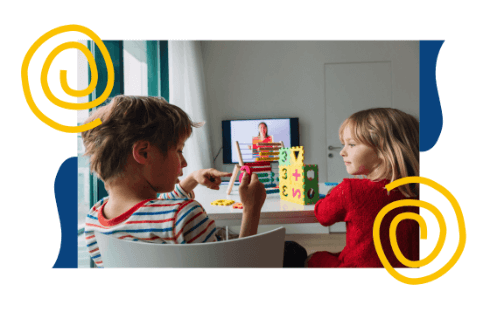
At-home and Online Math Assessment Evaluation for Elementary Students
As Featured In:








Personalized In-Home Math Assessment for Elementary Students Across Queens
Queens Letters provides an in-home elementary math assessment in Queens for families who want a clearer picture of a child’s current math skills, learning strengths, and next instructional steps. The assessment can help families respond to early concerns, plan proactive support, or identify opportunities for enrichment.
We provide in-home elementary math assessment throughout Queens, with remote options available when appropriate. Our specialists work directly with families in Queens homes, including Forest Hills, Rego Park, Kew Gardens, Fresh Meadows, Bayside, and nearby neighborhoods.
Queens Letters focuses on speech language, literacy, and math intervention that is proactive, early, and enrichment oriented academic and speech language support.
WE TRAVEL TO YOU THROUGHOUT QUEENS:
Astoria, Auburndale, Bayside, Bayswater, Beechhurst, Belle Harbor, Bellerose, Breezy Point, Briarwood, Cambria Heights, College Point, Corona, Douglaston, East Elmhurst, Edgemere, Elmhurst, Far Rockaway, Floral Park, Flushing, Forest Hills, Forest Park, Fresh Meadows, Glendale, Hamilton Beach, Hillcrest, Hollis, Hollis Hills, Holliswood, Howard Beach, Hunters Point, Jackson Heights, Jamaica, Jamaica Estates, Jamaica Hills, Kew Gardens, Kew Gardens Hills, Laurelton, Lefrak City, Lindenwood, Little Neck, Long Island City, Malba, Maspeth, Meadowmere, Middle Village, Neponsit, North Corona, Oakland Gardens, Ozone Park, Pomonok, Queens Village, Rego Park, Richmond Hill, Ridgewood, Rockaway Park, Rosedale, Roxbury, South Jamaica, South Ozone Park, Springfield Gardens, Steinway, Sunnyside, Utopia, Whitestone, Willets Point, Woodhaven, Woodside.





What This Service Is
An elementary math assessment in Queens identifies current math skills, instructional priorities, and opportunities for continued academic growth.
The assessment provides a structured look at a child’s mathematics performance rather than relying only on grades or homework. Results can help clarify foundational skills, current grade-level performance, and areas where a child may be ready for more advanced instruction.
For Queens families, assessment can serve as a starting point for school-aligned development, targeted tutoring, or enrichment. In-home support also allows the process to take place in a familiar environment without requiring travel to a learning center.
Service Snapshot
Service: Elementary math assessment
Location: Queens
Delivery: In-home, with remote options when appropriate
Student Type: Elementary-age learners
Focus Areas: Math skills, current performance, instructional priorities, enrichment opportunities
Goal: Establish a useful baseline for individualized academic support
When Families Seek This Support
Queens families use math assessments to clarify early concerns, plan proactive instruction, or determine whether a child needs greater academic challenge.
Families may seek an assessment when a child is not progressing as expected, when schoolwork begins requiring more support, or when parents want to understand a teacher’s concern more clearly.
Many Queens families begin support early rather than waiting. Proactive support helps prevent gaps from developing and can establish stronger foundations before elementary math becomes more complex.
Assessment is also appropriate for students who are progressing strongly. Advanced learners may benefit from identifying skills already mastered and determining where more challenging instruction could maintain academic momentum.
How It Works
In-home math assessment evaluates a child’s current skills and provides information that can guide individualized instruction.
The assessment is delivered in the home when appropriate, allowing the child to work in a familiar setting. Results can be considered alongside schoolwork, classroom expectations, parent observations, and the child’s current academic goals.
Queens families may use the findings to determine whether tutoring is needed, which skills deserve priority, or whether enrichment should move beyond current grade-level material.
Families often seek to maintain strong academic progress over time. An assessment creates a clearer baseline for deciding what should come next.
When Children Benefit
Elementary math assessment can support children with emerging concerns, proactive academic goals, or readiness for more advanced mathematics.
Early Concerns
An assessment may be useful when math facts, number sense, calculation, problem solving, or classroom concepts are becoming unexpectedly difficult. The goal is to understand the child’s current learning profile before small gaps become larger.
Proactive Support
Families do not need to wait for poor grades before seeking support. Proactive assessment can establish a baseline, clarify school-aligned priorities, and help families maintain progress as classroom expectations increase.
Enrichment
Children performing above grade level may need a different question answered: what should come next? Assessment can identify mastered material and help guide appropriately advanced instruction rather than repeating skills a child already understands.
Why Queens Families Choose This
Queens Letters combines in-home delivery, individualized academic guidance, and school-aligned support for elementary families throughout Queens.
Queens includes academically diverse public, private, and gifted learning environments, so children may encounter very different expectations even at the same grade level. Assessment should therefore consider more than a single score.
Queens Letters provides support delivered in the home and tailored to the child’s current academic needs. Families in Forest Hills, Rego Park, Kew Gardens, Fresh Meadows, Bayside, and surrounding Queens communities can use assessment findings to make more informed decisions about tutoring, continued development, or enrichment.
Proactive Math Support After the Assessment
Assessment findings help Queens families choose instruction that matches a child’s current skills, school expectations, and academic goals.
The next step depends on what the assessment shows. Some children benefit from structured instruction that strengthens specific foundations. Others need support maintaining strong progress as schoolwork becomes more demanding. Advanced learners may benefit from enrichment that introduces greater depth and challenge.
This work is designed for families seeking proactive and enrichment-oriented support, not only for children with clear developmental delays.
Math Diagnostic Tests (Kindergarten- 5th Grades)
Kindergarten

Comprehensive At-Home and Online Math Assessments at Queen Letters
At Queen Letters, we offer a comprehensive suite of at-home and online math assessments and interventions tailored to meet the needs of students at various developmental stages, including specialized services for younger children. Evaluations focus on essential math skills such as number sense, computation, problem-solving, and math fluency, ensuring a deep understanding of your child’s abilities and needs.
Addressing Parental Concerns and Navigating Learning Paths
Many parents feel uncertain about how their child’s math performance compares to school expectations or worry about their ability to assess their child’s skills accurately. Testing can be a valuable tool to uncover strengths and weaknesses, determine if a child is on par with their peers, and track progress over time. Effective assessments reveal when a child is ready to move on to new concepts and when they need more time to master a topic. Each learner follows a unique path—testing helps parents understand their child’s learning journey and how to guide them effectively. Additionally, specialized support is offered for children on the autism spectrum, tailoring our assessments to meet their specific needs.
Customized Math Assessments
Experienced math specialists utilize various tools to assess your child’s number sense, computation, problem-solving, and math fluency abilities. These comprehensive evaluations are designed to identify and address any specific challenges your child may face, providing a clear roadmap for improvement. Your child’s understanding of numbers, ability to perform basic arithmetic operations, and proficiency in handling more complex calculations are assessed. Additionally, their approach to solving mathematical problems is evaluated to determine if they are developing critical thinking skills and the ability to apply math concepts in different scenarios. Finally, their speed and accuracy in performing basic math operations are assessed, which are crucial for building a strong foundation.
Assessment Content by Grade
Math assessments are designed to align with Common Core Standards and address the specific skills and knowledge required at each grade level. Below is an overview of the key areas we assess by grade:
Preschool:
Early math skills evaluation assesses foundational skills such as number recognition, counting, basic arithmetic, spatial reasoning, and problem-solving strategies. We also consider the child’s attention span, motivation, and developmental stage, incorporating input from parents or caregivers to provide a holistic understanding of the child’s early math abilities.
Kindergarten:
- Counting and Cardinality: Understanding number names, counting sequences, and comparing numbers to establish a strong foundation in number sense.
- Operations and Algebraic Thinking: Introducing basic addition and subtraction concepts to build early problem-solving skills.
- Number and Operations in Base Ten: Laying the groundwork for place value with numbers 11-19.
- Measurement and Data: Comparing measurable attributes and classifying objects to develop an understanding of size, length, and volume.
- Geometry: Identifying and composing basic shapes, fostering spatial reasoning and early geometry skills.
1st grade:
- Operations and Algebraic Thinking: Focusing on addition and subtraction problem-solving and working with equations within 20.
- Number and Operations in Base Ten: Deepening the understanding of place value is crucial for future math success.
- Measurement and Data: Measuring lengths, telling time, and understanding money to introduce practical math applications.
- Geometry: Developing reasoning skills with shapes and understanding their properties.

2nd grade:
- Operations and Algebraic Thinking: Enhancing problem-solving skills with addition and subtraction and introducing the basics of multiplication.
- Number and Operations in Base Ten: Applying place value concepts to work with larger numbers.
- Measurement and Data: Measuring lengths and interpreting data to build a strong foundation in real-world math applications.
- Geometry: Further reasoning with shapes to understand their properties and relationships.
3rd grade:
- Operations and Algebraic Thinking: Introducing multiplication and division and developing problem-solving skills using the four operations.
- Number and Operations in Base Ten: Strengthening multi-digit arithmetic skills.
- Number and Operations—Fractions: Understanding fractions as numbers is a critical step in developing proportional reasoning.
- Measurement and Data: Exploring area and perimeter to connect geometry with real-world applications.
- Geometry: Developing a deeper understanding of shapes and their properties.
4th grade:
- Operations and Algebraic Thinking: Using the four operations in more complex situations and understanding factors and multiples.
- Number and Operations in Base Ten: Applying multi-digit arithmetic to larger numbers.
- Number and Operations – Fractions: Building on fraction equivalence and introducing decimal notation.
- Measurement and Data: Solving measurement problems involving real-world scenarios.
- Geometry: Understanding volume and its relationship to space and shape.
5th grade:
- Operations and Algebraic Thinking: Developing algebraic thinking with numerical expressions and patterns.
- Number and Operations in Base Ten: Mastering whole numbers and decimals to prepare for more advanced math concepts.
- Number and Operations – Fractions: Adding, subtracting, multiplying, and dividing fractions to solidify proportional reasoning.
- Measurement and Data: Graph data and understand volume to prepare for higher-level math concepts.
- Geometry: Converting measurement units and understanding complex shapes and their properties.
Math assessments are designed to identify your child’s strengths and areas for improvement at each critical stage, ensuring they are on track with their math education. Whether your child is struggling with specific math concepts or you simply want to ensure they are progressing as expected, our comprehensive evaluations provide the insights needed to support their learning journey.
Learning Disabilities and Developmental Disorders
If your child struggles with math due to learning disabilities, such as dyscalculia, licensed specialists can assess and treat these challenges. Collaboration is maintained with other professionals to ensure a comprehensive approach to your child’s math education.
Post-Neuropsychological Evaluation Support
For students who have undergone neuropsychological evaluations, supplemental assessments are offered focusing on specific math-related skills, such as number sense and computation, that may need to be fully addressed. This ensures a complete understanding of your child’s math abilities and provides targeted goals for improvement.
Testing: A Crucial Tool for Understanding Your Child’s Math Journey
Testing is key to understanding where your child stands in their math journey. With the right assessments, you can guide their learning effectively and track their progress.
Types of Assessments We Offer:
- Formative Assessments: Informal tools, like discussions or math games, adjust teaching methods based on real-time needs.
- Criterion-Referenced Assessments (CRA): Formal tests to measure specific skills to master certain math concepts.
- Norm-Referenced Assessments (NRT): Standardized tests that compare your child’s performance to a norm group, providing insights without a pass/fail outcome.
Standardized Tests:
Standardized tests can be either fixed, where all students answer the same questions, or adaptive, where questions adjust based on the student’s performance level. Adaptive tests are particularly useful for accurately gauging a child’s math abilities.
Choosing the Right Test:
Considerations for selecting the appropriate test include:
- Norm Date: Ensures relevant percentile rankings.
- Timed vs. Untimed: Untimed tests help measure ability without time constraints.
- Fixed vs. Adaptive: Adaptive tests offer a tailored difficulty level for a more accurate assessment.
- Test Format: Online tests provide convenience, immediate scoring, and accessibility features for students with special needs.
Flexible and Convenient Assessment Options
In-Person Math Assessments at Your Home
At Queen Letters, we offer flexible, in-person math assessments conducted by professional math specialists in the comfort of your home. Services are available in Manhattan, Brooklyn, Queens, The Bronx, Westchester, and Long Island (Nassau County). Personalized attention is provided to accurately evaluate your child’s math skills and learning needs.
Two main assessment options are offered:
- Math Skills and Fluency Assessments: Approximately $300 for a one-hour in-home visit, with a detailed report delivered within ten business days.
- Comprehensive Math Assessment: Approximately $500 for a 90-minute in-home visit, including a thorough report within ten business days.
These in-home assessments provide a convenient and comfortable environment for your child, allowing us to assess their math abilities and tailor recommendations for improvement accurately. Contact us to schedule an in-person math assessment and take the first step toward supporting your child’s educational success

At-Home Math Assessments (Self-Administered on a Computer)
Experience flexible testing options you can administer from the comfort of your home for just $40, including a comprehensive math assessment with detailed results. This third-party system delivers valid and reliable results, making it ideal for homeschoolers but equally effective for parents seeking an accurate understanding of their child’s math skills.
Target Audience: Designed for students in kindergarten through sixth grade.
Adaptive Testing: Assessments adjust in difficulty based on student responses, offering accurate evaluations. The results include RIT scores, percentile rankings, and a detailed breakdown of mathematical abilities.
Home-Based Testing: Conduct assessments at home, giving parents and educators the tools to tailor curricula to meet each student’s unique needs.
Focus Areas: Measures foundational math skills, including computation, problem-solving, and understanding of mathematical concepts.
Benefits: Provides educators with actionable data to support students’ math development, identifying strengths and areas needing targeted intervention.
Comprehensive Reporting and Recommendations
After the assessment, a detailed report is provided that includes your child’s performance, professional impressions, recommendations, and specific goals to enhance their math skills. If necessary, further steps are recommended, such as consultations with other professionals, to ensure your child receives the most effective support.
Additional Options for a Formal Diagnosis:
Neuropsychological Evaluations: We recommend neuropsychological evaluations, typically starting at $6,000 for formal diagnoses. Connections can be made with top local neuropsychologists in your area for consultation. Alternatively, here’s more information on lower-cost neuropsychological and psychoeducational evaluation options.
Free Consultation and Guidance
Understanding your child’s educational needs can be overwhelming. That’s why a free consultation is offered to review report cards and assessments and discuss your child’s math goals. Information is broken down clearly.
Take the Next Step Toward Your Child’s Math Success
Ready to unlock your child’s full potential in math? Schedule a comprehensive math assessment with Queen Letters today and give them the tools they need to excel. Whether an in-person evaluation in the comfort of your home or a convenient online session is preferred, support is provided every step of the way.
FAQ
Do you provide in-home elementary math assessments throughout Queens?
In-home elementary math assessments are available throughout Queens, with remote options available when appropriate.
Queens Letters works directly with families in Queens homes, including Forest Hills, Rego Park, Kew Gardens, Fresh Meadows, Bayside, and surrounding neighborhoods.
When should a family consider a math assessment?
Math assessment can be useful before significant difficulty develops or when a child needs greater academic challenge.
Families may seek assessment after noticing early difficulty, before beginning tutoring, when school expectations increase, or when a strong math student appears ready for enrichment.
Does a child need to be struggling to receive an assessment?
Math assessment can support both children experiencing difficulty and students progressing at or above grade level.
Assessment can identify areas needing additional instruction, confirm that foundational skills are developing appropriately, or reveal opportunities for more advanced work.
What happens after the assessment?
Assessment results can guide decisions about tutoring, skill development, instructional priorities, and enrichment.
Families can use the findings to determine which areas deserve attention and whether ongoing in-home support would be useful.
Is in-home assessment different from a learning center?
In-home assessment allows children to complete academic work in a familiar environment while eliminating travel to a learning center.
Queens Letters emphasizes individualized in-home service rather than a center-based model.
MEET QUEENS LETTERS MATH TUTORS WHO TRAVEL TO YOUR HOME

Dan B.
M.S. ED., NYS
Certified Childhood
General And Special Education (Grades 1-6)
Lynsey
Bachelors Degree in Childhood Education (1-6), Masters of Science Degree in Literacy (Birth-6)

Brian
MAT in Early Childhood Education,
Certificate in Childhood Education (Grades 1-6)

Rebecca M.
M.S. . ELEMENTARY EDUCATION, CERTIFIED ELEMENTARY TEACHER (Grades 1-6 )

Julia
M.S.Ed. in Literacy Education (Grades 1-6), Bachelor of Science in Childhood and Special Education (Grades 1-6)

Janeese C.
Bachelor of Science
in Elementary Education
and Master’s Degree in
Special Education
FREE CONSULTATION!!!
Call & Text: (917) 426-8880
Email:queens@brooklynletters.com
(we respond to email right away!)